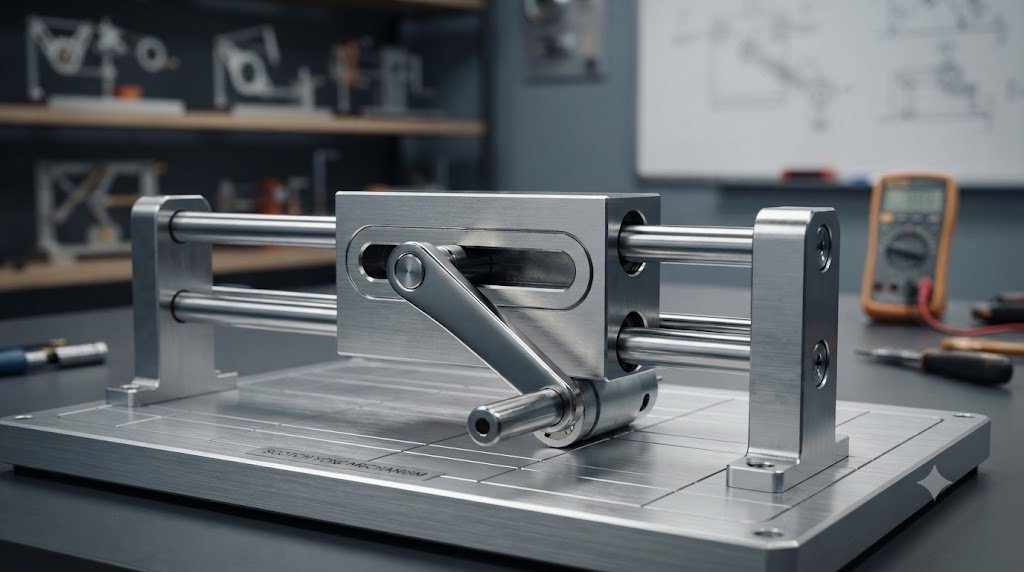
Worm Gear Drives: Lead Angle Kinematics, Sliding Tribology, Self-Locking Conditions and Thermal Dissipation
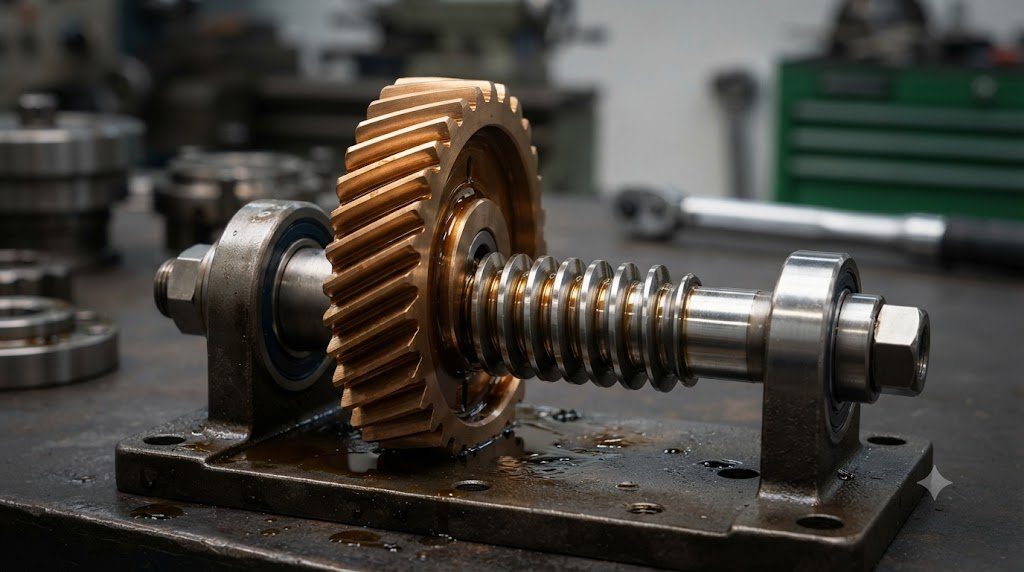
When an engineering application demands high speed reduction ratios (exceeding $30:1$ up to $100:1$) across non-intersecting, perpendicular ($90^\circ$) shafts within a single stage, Worm Gear Drives represent the definitive mechanical solution. Composed of a driving Worm (resembling an acme power screw) and a conjugate Worm Wheel (a throated helical gear), worm drives deliver silent power … Read more

Epicyclic Planetary Gear Train Kinematics: Torque Distribution, Carrier Ratios and Efficiency Optimization

When an engineering design mandates high speed reduction ratios within a compact, coaxial cylindrical envelope, conventional fixed-axis countershaft gearboxes become impractically large and heavy. In these applications, mechanical engineers deploy Epicyclic (Planetary) Gear Trains. Composed of a central Sun Gear, multiple orbiting Planet Gears mounted upon a rotating Carrier, and an internally toothed Ring Gear … Read more

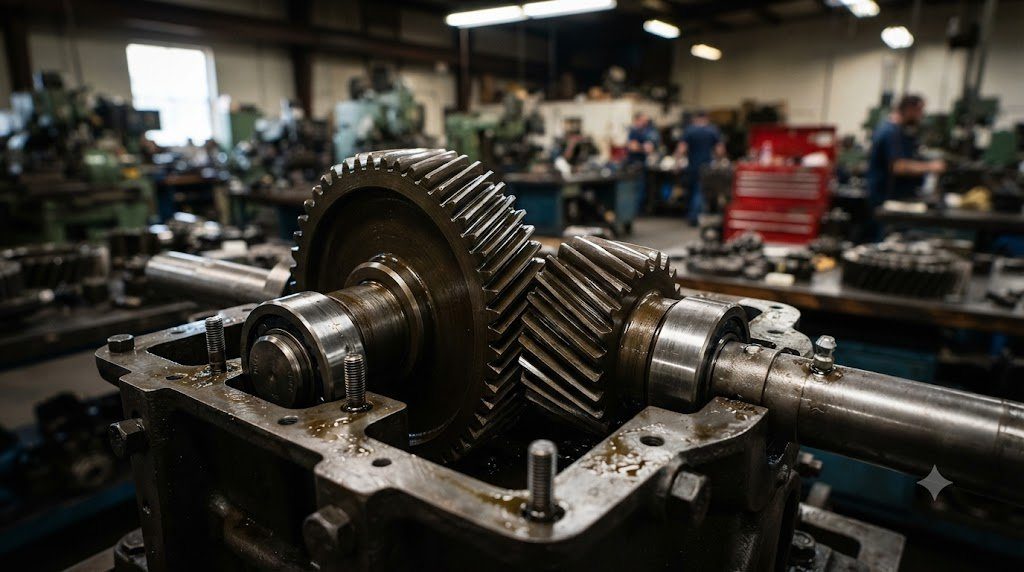
Spur vs. Helical Gears: Axial Thrust Management, Helix Angles and Lewis Bending Stress Calculations

Parallel-axis mechanical transmissions rely predominantly on two fundamental gear architectures: Spur Gears and Helical Gears. While spur gears feature teeth cut parallel to the shaft’s rotational axis, helical gear teeth are cut at an angle—designated the Helix Angle ($\beta$)—forming a continuous cylindrical helix. This geometric distinction transforms the nature of tooth engagement from abrupt instantaneous … Read more

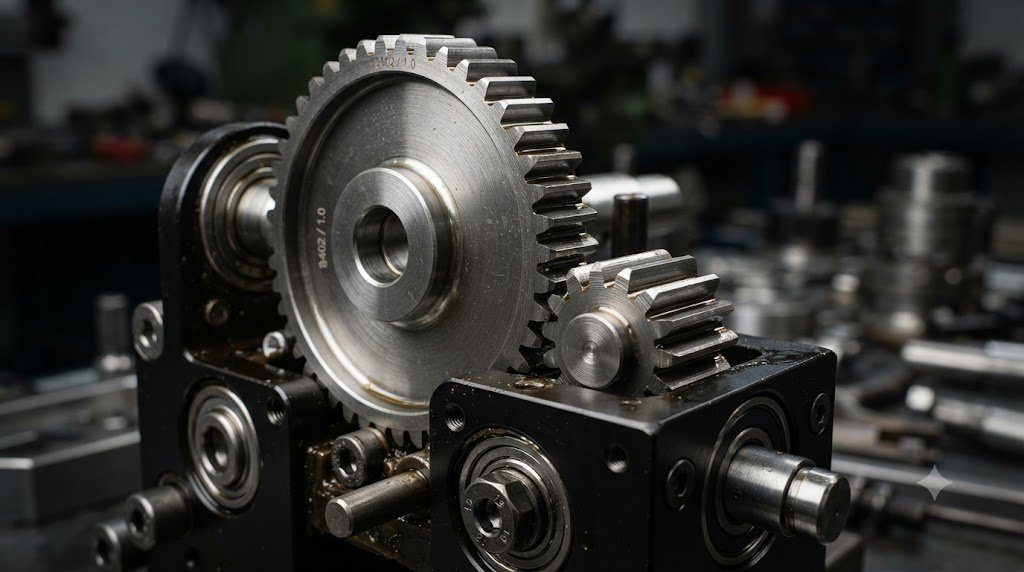
Involute Gear Tooth Profiles: Base Circle Kinematics, Pressure Angles and Contact Ratio Analysis

In the discipline of precision machine design, no mechanical innovation has exerted a more profound influence on industrial power transmission than the involute tooth profile. Conceived mathematically by Leonhard Euler in the 18th century, the involute curve resolves the fundamental kinematic challenge of maintaining a strictly constant angular velocity ratio between two rotating shafts regardless … Read more