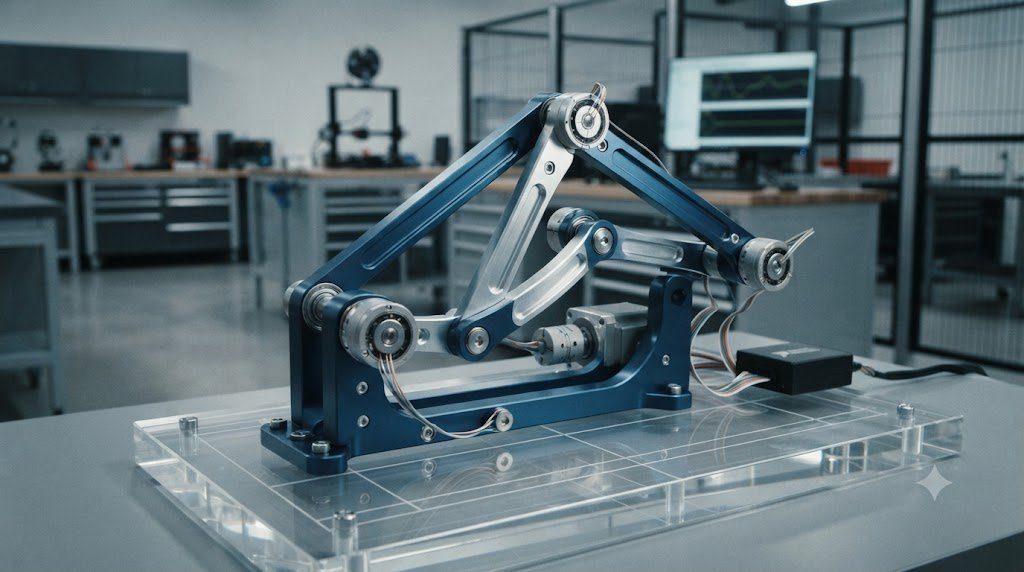
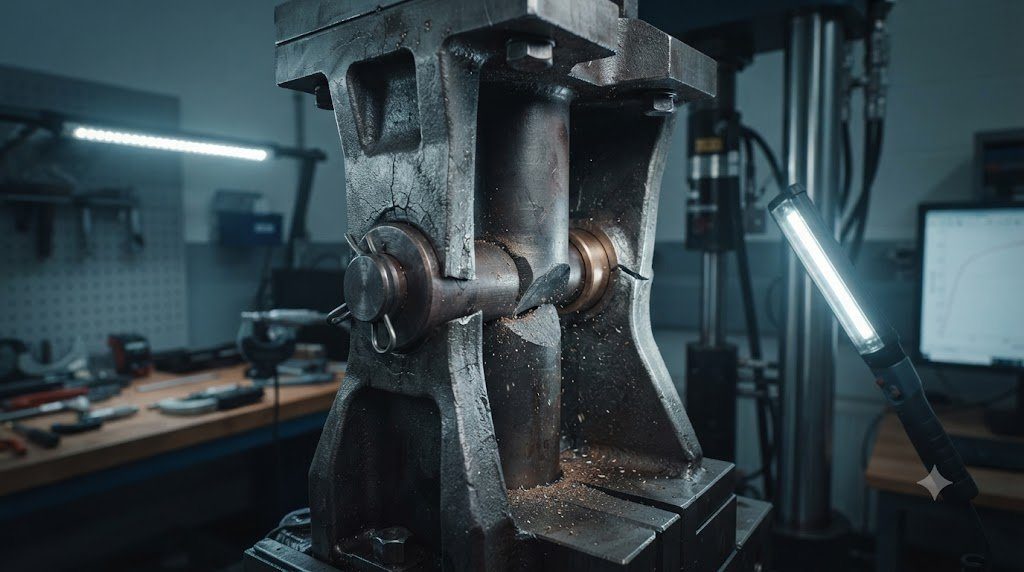
Scotch Yoke vs. Slider-Crank: Pure Harmonic Motion Kinematics, Lateral Piston Thrust and Pin Wear Mechanics
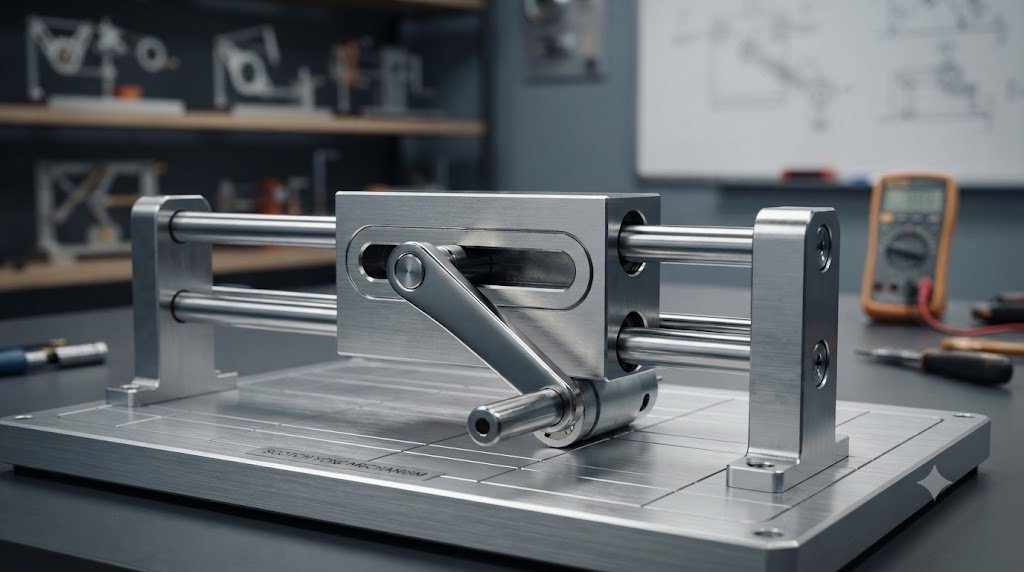
In reciprocating machinery—such as internal combustion engines, air compressors, pneumatic valve actuators, and test bench shaker tables—designers must convert continuous rotary motion into reciprocating linear motion. The two preeminent mechanical linkages utilized for this conversion are the ubiquitous Slider-Crank Mechanism and the precision Scotch Yoke Mechanism. While both mechanisms produce cyclic linear reciprocation, their mathematical … Read more
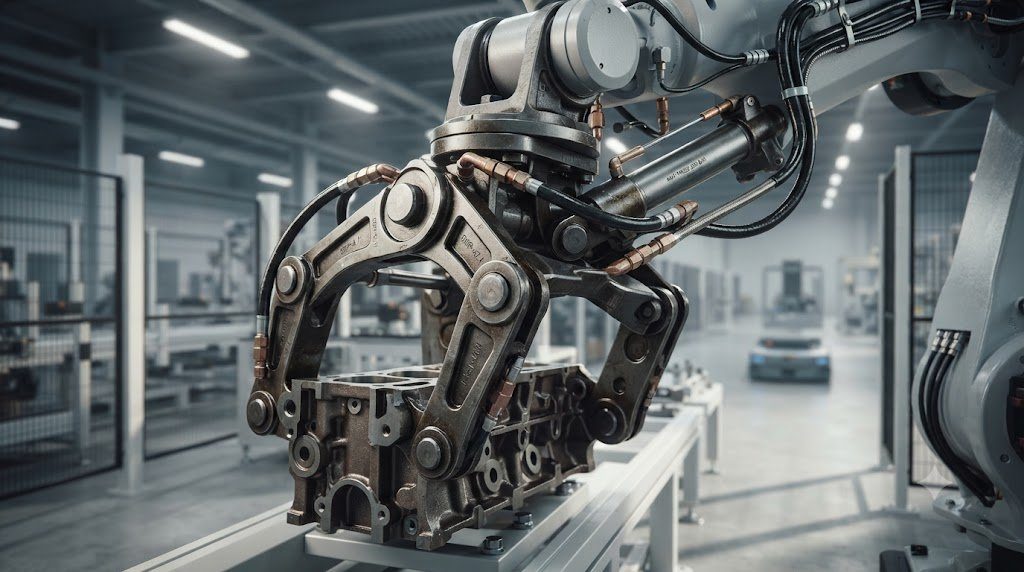
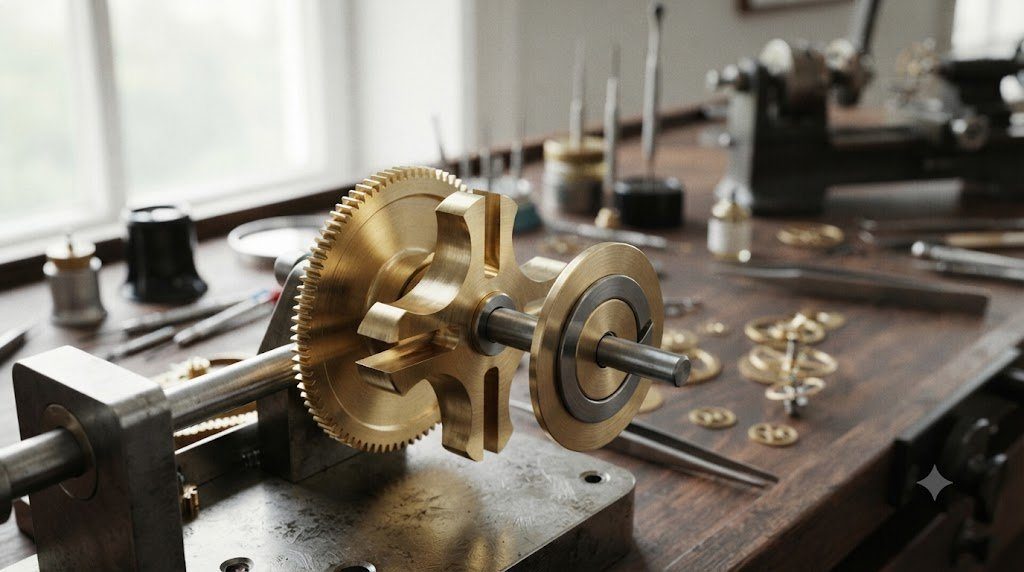
Geneva Drives: Intermittent Motion Indexing Kinematics, Locking Discs and Dynamic Pin Impact Stresses

In high-speed automated assembly lines, packaging machinery, movie projectors, and rotary machining indexing tables, mechanisms must transform uniform continuous rotary motion into precise intermittent rotary indexing motion. While modern automation frequently utilizes servomotors, mechanical Geneva Drives (Maltese Cross Mechanisms) remain widely utilized due to absolute mechanical positioning repeatability, zero electronic drift, and fail-safe mechanical locking … Read more

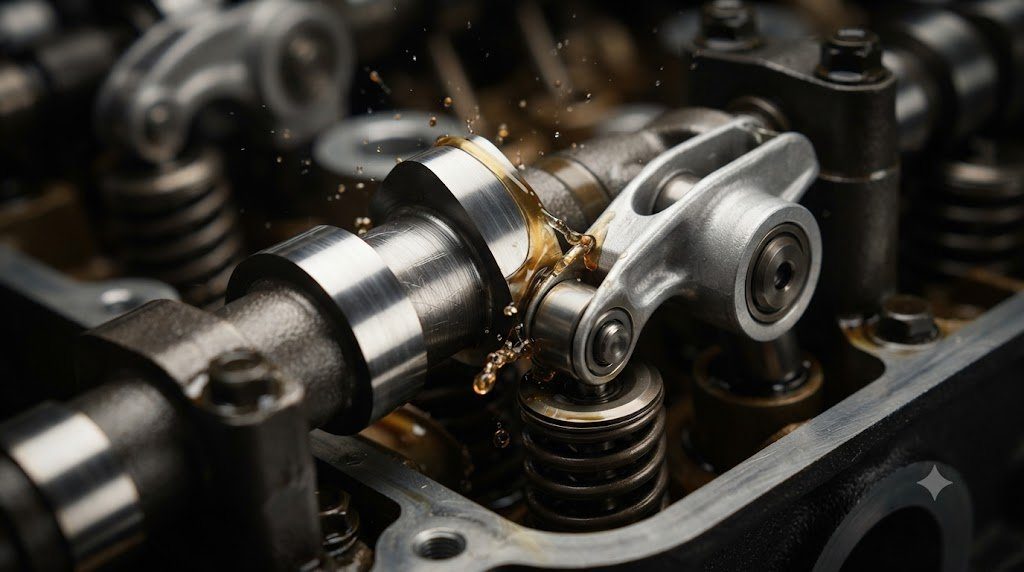
Cam and Follower Profile Design: SVAJ Curves, Pressure Angles, Base Circle Sizing and Undercutting

When an automated production machine demands highly irregular, custom output motion profiles—incorporating long dwell periods, asymmetric rise strokes, and rapid return cycles—conventional linkages and gear trains become overwhelmingly complex. In these demanding automation architectures, mechanical designers deploy Cam and Follower Mechanisms. A cam is a contoured driving element (typically a rotating plate or cylindrical barrel) … Read more

Four-Bar Linkage Kinematic Synthesis: Grashof Criterion, Freudenstein’s Equation and Dead-Center Singularities

In the vast realm of planar kinematic mechanisms, the Planar Four-Bar Linkage is the foundational architecture upon which advanced machine motion is built. Composed of four rigid links interconnected by four revolute (pin) joints—designated the Ground Link ($d$), the Input Crank ($a$), the Coupler Link ($b$), and the Output Follower/Rocker ($c$)—the four-bar mechanism transforms uniform … Read more

Fulcrum Pin Shear Stresses: Bushing Tribology, Bearing Contact Pressures and Structural Beam Deflection

While mechanical engineering students often model levers as massless, infinitely rigid line segments rotating around frictionless points, real-world machines are constrained by physical structural mechanics. When a high-ratio lever amplifies thousands of newtons of force, the entire load is concentrated directly onto the Fulcrum Pin and its supporting bushings. Catastrophic lever failures rarely occur from … Read more

Compound Lever Linkages: Virtual Work Principle, Transmission Angles and High-Ratio Force Amplification

When an engineering application mandates force multiplication ratios exceeding $100:1$ up to $1,000:1$—such as in material tensile testing load frames, mechanical truck weighing scales, heavy shearing shears, and high-pressure hydraulic valve pilots—a single simple lever becomes impractically long. To achieve colossal mechanical advantage within a compact structural envelope, engineers connect multiple levers in series, creating … Read more

Toggle Mechanisms: Infinite Mechanical Advantage, Clamping Singularities and Over-Center Locking Dynamics

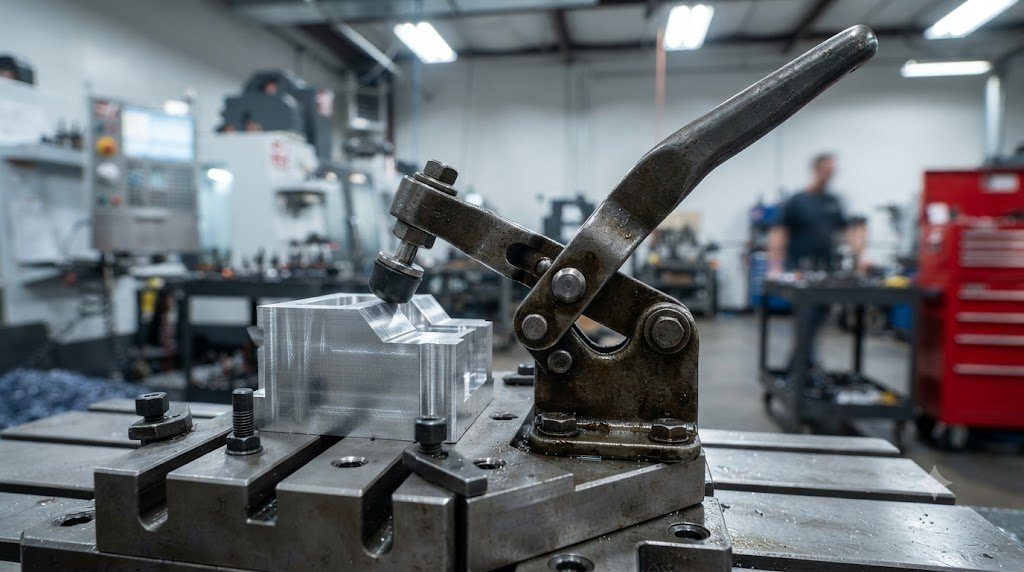
In heavy manufacturing machinery—including injection molding platen clamps, metal sheet stamping presses, rock crushers, and quick-release toggle clamps—designers require immense clamping forces at the end of a mechanical stroke, accompanied by a positive mechanical lock that consumes zero holding power. The definitive mechanism engineered for this task is the Toggle Mechanism. Exploiting a kinematic singularity … Read more

First, Second, and Third-Class Levers: Moment Arms, Mechanical Advantage and Fulcrum Reaction Forces

Among the six classical simple machines defined by Renaissance scientists, the Lever is the most fundamental mechanism for altering force vectors, multiplying mechanical torque, and trading physical effort for spatial displacement. Formally formulated by Archimedes in the third century BC with the famous axiom ‘Give me a place to stand and with a lever I … Read more

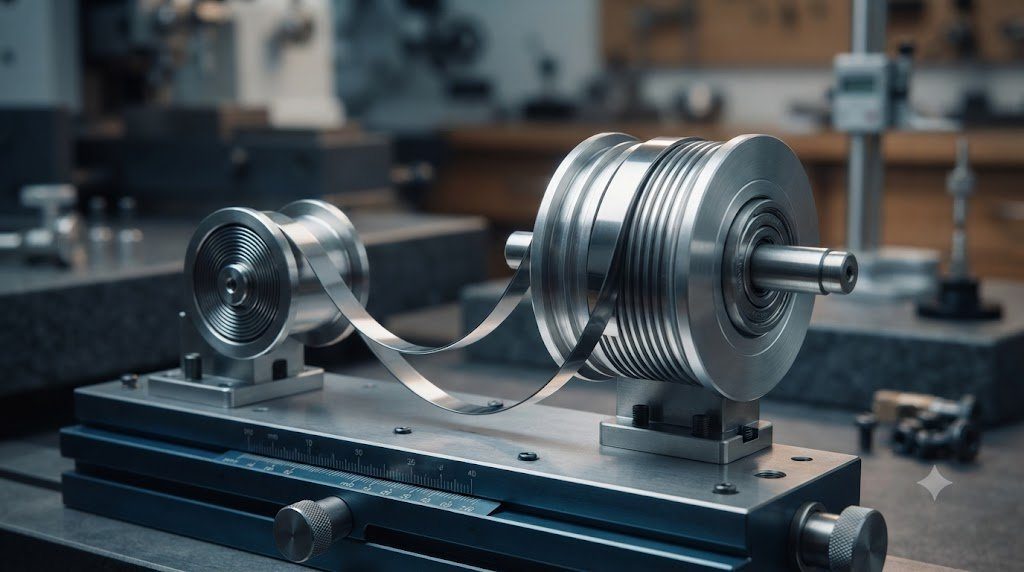
Constant-Force Springs: Spiral Power Bands, Residual Prestressing and Counterbalance Retraction Dynamics

In precision mechanism design, conventional helical wire springs suffer from a fundamental physical limitation imposed by Hooke’s Law: force increases linearly with deflection ($F = k \cdot x$). In applications such as retractable seat belts, counterbalanced surgical monitor arms, brush holders in electric motors, and satellite solar array deployment booms, mechanisms require a strictly constant … Read more

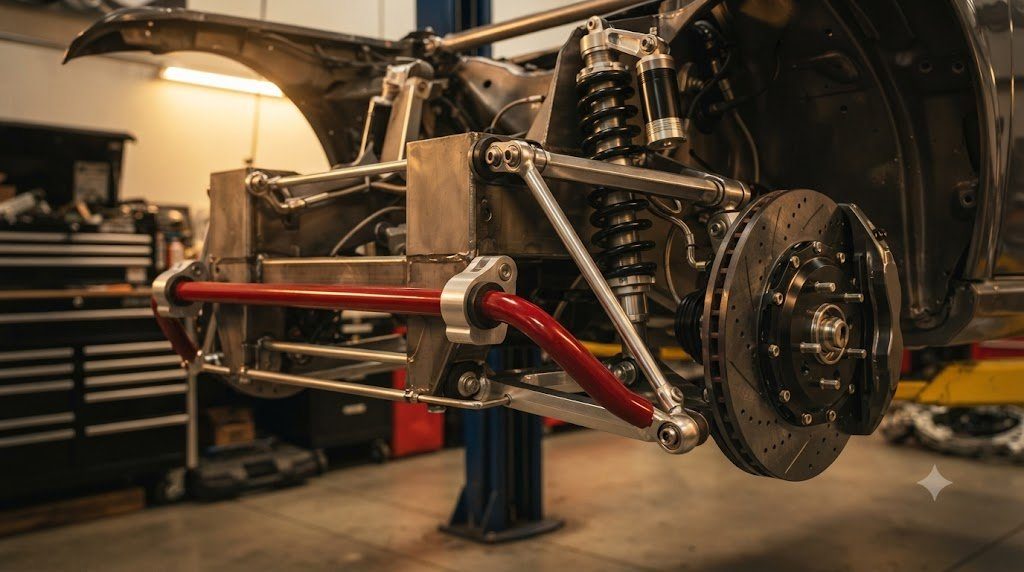
Torsion Springs and Anti-Roll Sway Bars: Angular Deflection Kinematics, Bending Fatigue and Leg Configurations

While helical compression springs deform under internal torsional shear, Helical Torsion Springs and vehicle Anti-Roll Sway Bars represent compliant mechanisms engineered to store elastic energy through rotational angular displacement. In contrast to their name, the wire coils of a helical torsion spring experience pure bending stress rather than torsion when loaded by angular torque. Understanding … Read more

About Mechanismlab

About Mechanismlab

MechanismLab is an engineering reference dedicated to the physics and design of mechanical machines. We deconstruct gear geometry, bearing lubrication dynamics, harmonic spring rates, and kinematic inversions with mathematical precision.

Learn More →
Expert Advice Kinematic Inversion Theory
Gear Train Calculations Bearing Fatigue Tolerances
Spring Harmonic Rates Linkage Synthesis Models