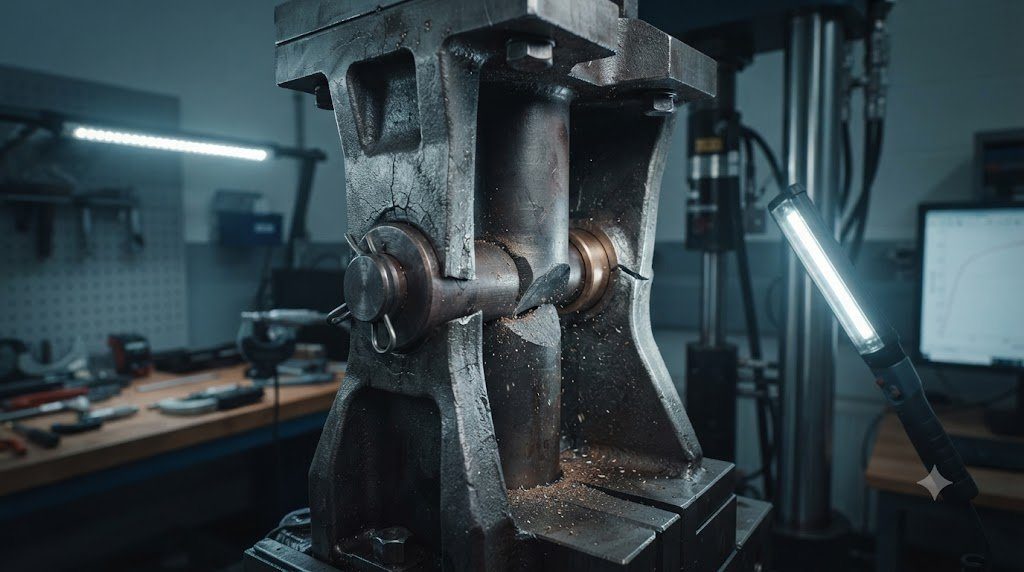
Belleville Disc Springs: Load-Deflection Non-Linearity, Series-Parallel Stacks and Bolted Joint Preload
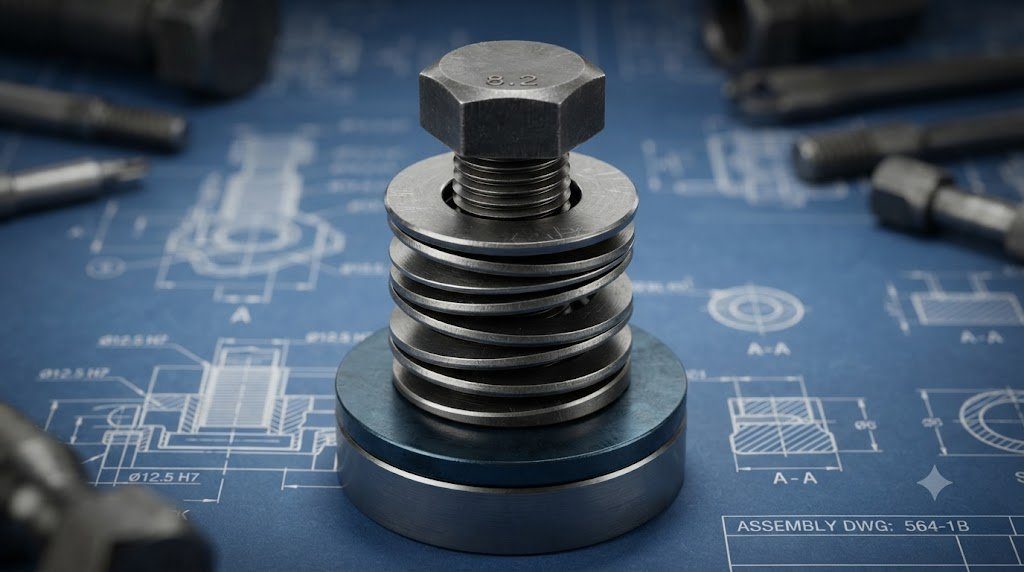
When mechanical assemblies mandate extraordinarily high clamping forces (tens to hundreds of kilonewtons) within axial packaging envelopes measuring mere millimeters, conventional helical wire springs are physically unusable. In these extreme force-density environments, engineers utilize Belleville Disc Springs (Conical Spring Washers). Patented by Julien Belleville in 1867 and standardized under DIN 2092 and DIN 2093, Belleville … Read more
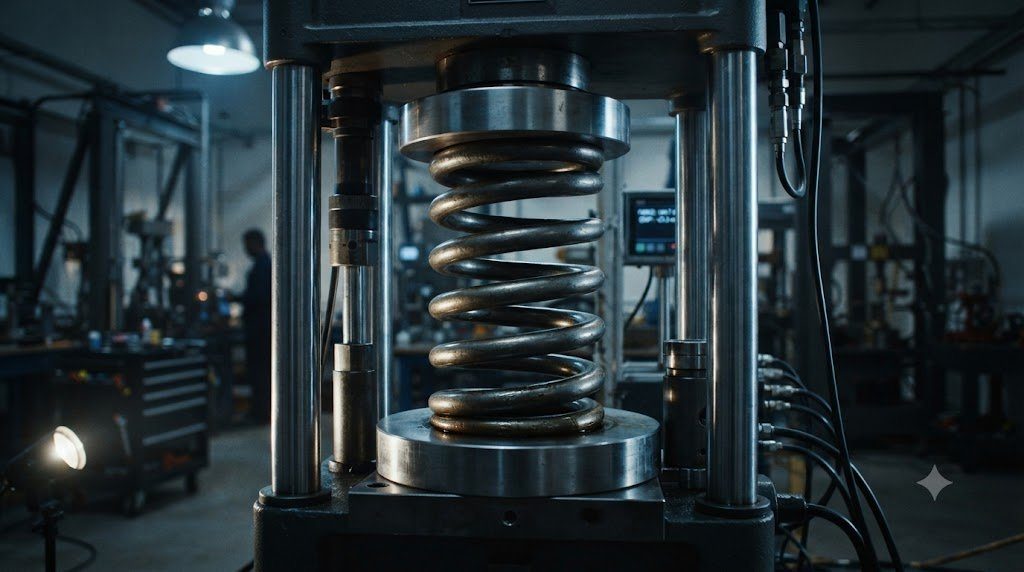
Helical Compression Springs: Wahl Stress Factor, Active Coils, Shear Modulus and Column Buckling Limits

Within the domain of compliant machine elements, the Helical Compression Spring is the fundamental mechanical device engineered to absorb mechanical shock, store potential energy, maintain clamping preloads, and mitigate dynamic oscillations. Manufactured from cold-drawn or oil-tempered spring wire wound into an open helix, compression springs undergo pure torsional shear deformation along the wire cross-section when … Read more

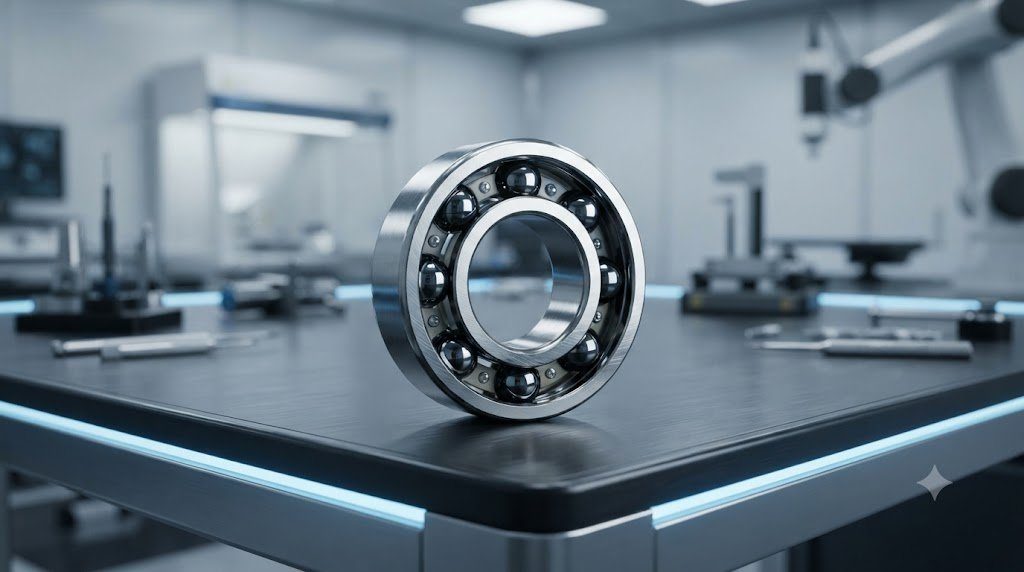
Ceramic Hybrid Bearings: Silicon Nitride Rolling Elements, High-Speed Spindle Tribology and Electrical Insulation

In extreme engineering domains—such as 60,000 RPM high-speed CNC milling spindles, dental handpieces, cryogenic rocket turbopumps, and variable-frequency drive (VFD) electric vehicle traction motors—conventional through-hardened steel bearings suffer rapid thermal seizure, centrifugal overloading, and destructive electrical arcing. To overcome these physical barriers, precision engineers deploy Ceramic Hybrid Bearings. Featuring precision-ground bearing-grade Silicon Nitride ($Si_3N_4$) ceramic … Read more

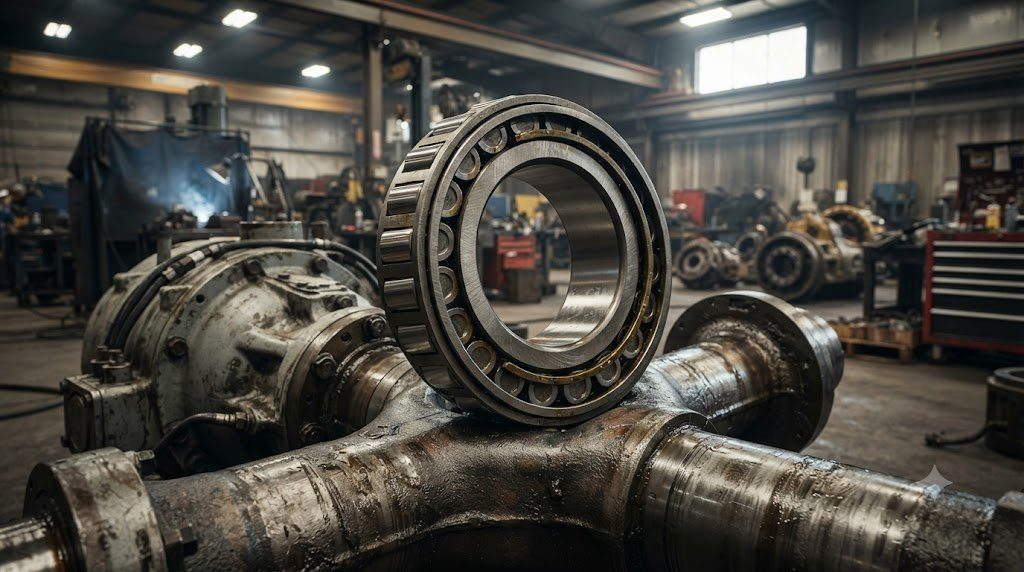
Tapered Roller Bearings: Axial Preload Techniques, Contact Angle Geometry and Heavy Combined Load Mechanics

In heavy mechanical drivetrains—including automotive differential pinion shafts, wheel hubs, wind turbine mainshafts, and heavy rolling mill reduction gearboxes—bearings must support massive simultaneous radial loads and unidirectional or reversing axial thrust loads with maximum structural rigidity. In these extreme load environments, Tapered Roller Bearings (TRBs) represent the supreme engineering choice. Engineered with conical raceways and … Read more

Deep Groove Ball Bearings: Radial Internal Clearance, Hertzian Contact and ISO 281 Fatigue Life Ratings

Among all standardized rolling element bearings, the Deep Groove Ball Bearing (Conrad Type) is by far the most ubiquitous and versatile mechanical component in modern engineering. Capable of supporting moderate radial loads alongside simultaneous bidirectional axial thrust loads at high rotational speeds, deep groove ball bearings owe their widespread deployment to low rotational friction torque, … Read more

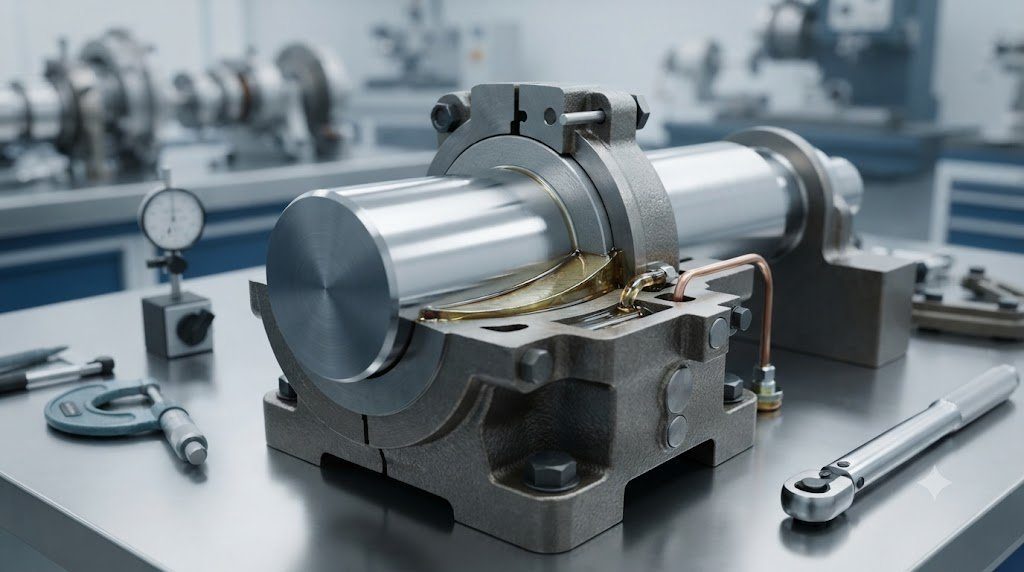
Hydrodynamic Journal Bearings: Petroff’s Equation, Reynolds Lubrication and Oil Whirl Instability

In heavy rotating machinery—including multi-megawatt steam turbines, centrifugal compressors, large naval propulsion shafts, and internal combustion engine crankshafts—rolling element bearings are rendered unviable by finite fatigue life, severe acoustic emissions, and destructive shock loads. In these demanding regimes, mechanical engineers deploy Hydrodynamic Journal (Fluid-Film) Bearings. Operating on the principle of fluid film separation, a hydrodynamic … Read more

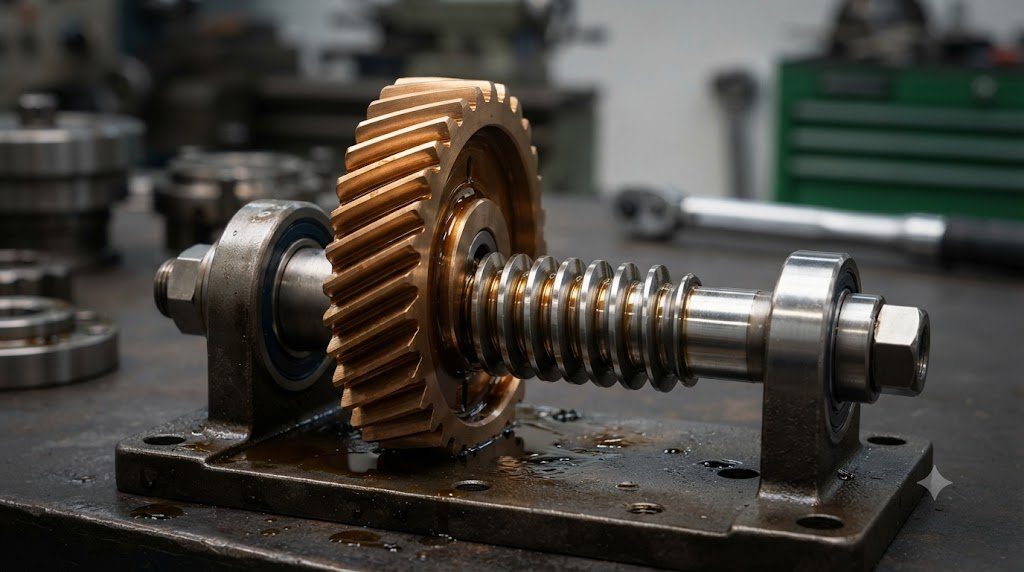
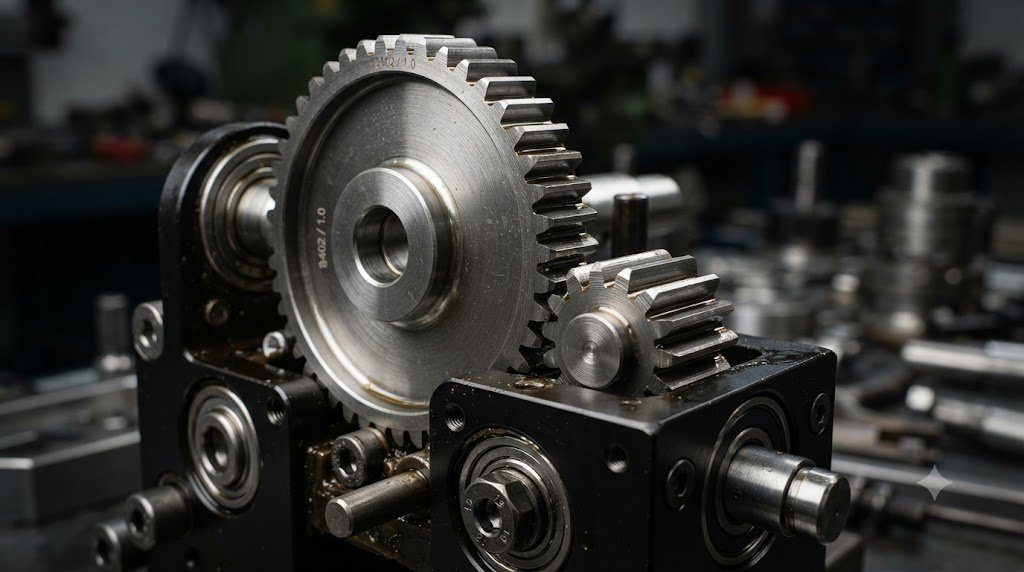
Worm Gear Drives: Lead Angle Kinematics, Sliding Tribology, Self-Locking Conditions and Thermal Dissipation

When an engineering application demands high speed reduction ratios (exceeding $30:1$ up to $100:1$) across non-intersecting, perpendicular ($90^\circ$) shafts within a single stage, Worm Gear Drives represent the definitive mechanical solution. Composed of a driving Worm (resembling an acme power screw) and a conjugate Worm Wheel (a throated helical gear), worm drives deliver silent power … Read more

Epicyclic Planetary Gear Train Kinematics: Torque Distribution, Carrier Ratios and Efficiency Optimization

When an engineering design mandates high speed reduction ratios within a compact, coaxial cylindrical envelope, conventional fixed-axis countershaft gearboxes become impractically large and heavy. In these applications, mechanical engineers deploy Epicyclic (Planetary) Gear Trains. Composed of a central Sun Gear, multiple orbiting Planet Gears mounted upon a rotating Carrier, and an internally toothed Ring Gear … Read more

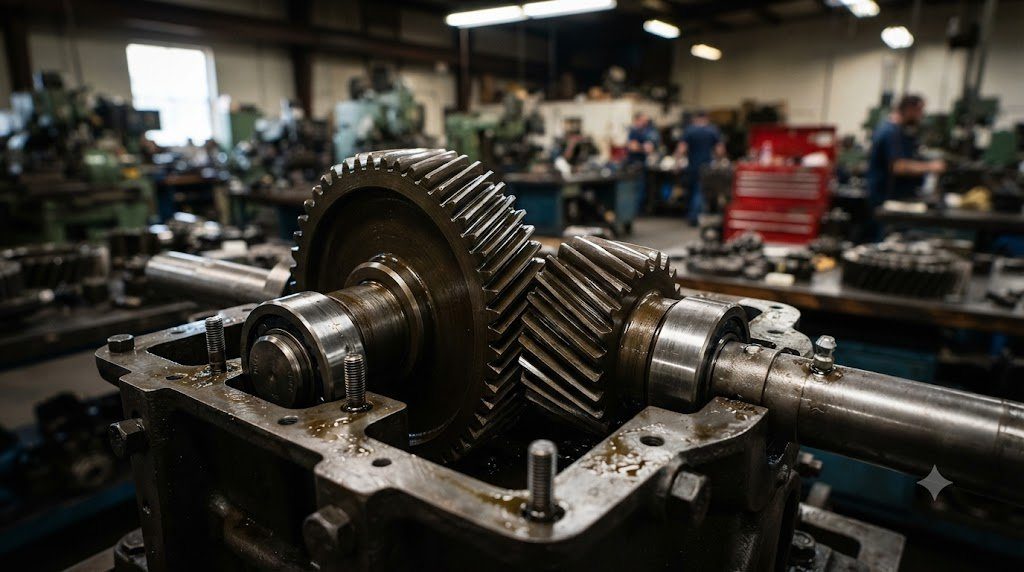
Spur vs. Helical Gears: Axial Thrust Management, Helix Angles and Lewis Bending Stress Calculations

Parallel-axis mechanical transmissions rely predominantly on two fundamental gear architectures: Spur Gears and Helical Gears. While spur gears feature teeth cut parallel to the shaft’s rotational axis, helical gear teeth are cut at an angle—designated the Helix Angle ($\beta$)—forming a continuous cylindrical helix. This geometric distinction transforms the nature of tooth engagement from abrupt instantaneous … Read more

Involute Gear Tooth Profiles: Base Circle Kinematics, Pressure Angles and Contact Ratio Analysis

In the discipline of precision machine design, no mechanical innovation has exerted a more profound influence on industrial power transmission than the involute tooth profile. Conceived mathematically by Leonhard Euler in the 18th century, the involute curve resolves the fundamental kinematic challenge of maintaining a strictly constant angular velocity ratio between two rotating shafts regardless … Read more

About Mechanismlab

About Mechanismlab

MechanismLab is an engineering reference dedicated to the physics and design of mechanical machines. We deconstruct gear geometry, bearing lubrication dynamics, harmonic spring rates, and kinematic inversions with mathematical precision.

Learn More →
Expert Advice Kinematic Inversion Theory
Gear Train Calculations Bearing Fatigue Tolerances
Spring Harmonic Rates Linkage Synthesis Models